Catherine Booth: Laying the Foundations of a Radical Movement
Readable analysis which argues that Catherine - the remarkable wife of William - shaped the theological content and direction of the Salvation Army
Catherine Booth: laying the foundations of a Radical Movement
By John Read
Lutterworth Press
ISBN 978-0-7188-9320-0
Reviewed by Stephen Copson
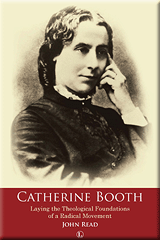
Catherine Booth was a brilliant evangelist, creative thinker, advocate of women’s rights and apologist for the new movement to be known as the Salvation Army. William Booth was married to her. Nonetheless John Read points out how Catherine’s contribution to the development of the Army has failed to get due recognition, and her significance has been overshadowed by the acclaim for William.
This book is not a biography, although there is some biographical material. Rather it examines the depth and range of Catherine’s thought. Read argues that she shaped the theological content and direction of the Salvation Army.
The author shows how both Wesleyan and Congregational traditions informed her theological convictions. Catherine was deeply influenced by the Holiness movement and sought to bring together a passion for holy living with a concern for the welfare of society, especially for those at the bottom of the pile – a combination for which the Army became renowned. She was a popular revivalist, drawing large crowds to hear the message, preaching salvation for sins and sanctification in living.
For her, the church was the expression of good news for all women and men. For her church, Cattherine coined the phrase “aggressive Christianity”, one that did not wait for people to come but went out to seek them; a place where people did not only hear the gospel proclaimed but where they were also persuaded to experience its truth. Ministry evolved in this context. The uniform partly reflected the image of holy warfare. So the Salvation Army developed as a missionary organisation where neither religious experience nor worship were loaded with undue formalism and the resulting spirituality was vigorous and direct.
Catherine was not a theological innovator but she read widely from John Wesley, Charles Finney and Joseph Fletcher among others to create a coherent pattern of thought that embraced the grace of God, the sacrifice of Christ and the active presence of the Spirit. John Read is convinced that Catherine was the theological brains behind the new movement and helped to shape its distinctive direction and he offers an analysis that is both informative and readable.
Read cites the estimated attendance of nearly 40,000 people at Catherine Booth’s funeral service in Olympia after her premature death in 1890. It was eloquent testimony to a remarkable woman.
Stephen Copson is a Regional Minister with the Central Baptist Association
Baptist Times, 13/06/2014