A decade of faithful persistence
How Baptist voices contributed to bringing the two-child limit to an end, by Public Issues Enabler Steve Tinning
Last week’s Budget has drawn a lot of media attention in recent days, for a number of reasons. However, one headline that marks a momentous turn will be celebrated by many Baptist Christians. The government’s decision to abolish the two-child limit will likely lift 450,000 children out of poverty by the end of the decade. For thousands of UK families – including many in our communities and congregations – this change will bring real, tangible relief.
This outcome follows a decade of faithful witness in a political environment where, heartbreakingly, speaking up for children in poverty has often demanded courage, prayer, and persistent, principled advocacy. From the very first moment the two-child policy was mooted, over ten years ago, Baptist voices have spoken out against it, so last week’s positive announcement that it will finally be scrapped, should be received as a moment of deep encouragement by every Christian, every minister, and every congregation that upholds justice, speaks up for children, and stands with struggling families.
Below I want to trace something of that journey – the voices, the statement, the resources, the local stories – in the hope that this welcome outcome will both honour past efforts and invigorate our ongoing commitment to speak for Christian values and truths in the public square.
A timeline of Baptist advocacy: from steadfast witness to structural change
2015 – The first warning signs
In 2015, the Joint Public Issues Team (JPIT – a Baptist, Methodist and URC partnership for peace and justice), published “Enough: Our Responsibility to Meet Families’ Needs”. That report directly named the forthcoming “two-child rule” as unjust, and argued that while systems must change in order to meet the needs of new generations, maintaining welfare principles, rooted in the God-given dignity of every person, is vital.
As government prepared its Welfare Reform and Work Bill, Baptists – alongside other faith leaders – began to sound the alarm.
Late 2015 – Faith leaders unite against the policy
At the close of 2015, The Baptist Union of Great Britain co-wrote a briefing to the House of Lords opposing the two-child limit. The coalition of faith groups behind the briefing described the policy as “fundamentally anti-family” and warned it would undermine family stability and punish innocent children.
The fact that Baptists were co-authors and co-signatories of this briefing was publicised in the Guardian and the Telegraph, and signalled that this was not a fringe concern but a mainstream, faith led objection.
2017 – Implementation and continued Baptist voices
On 6 April 2017, the two-child limit came into effect – denying child support provided to families for any third (or subsequent) child born after that date.
In response, The Joint Public Issues Team released a statement criticising the Government’s new two-child limit as "deliberately ignoring" the needs of some of the UK’s poorest children. The Revd Stephen Keyworth, then Faith and Society Team Leader for the Baptist Union of Great Britain, declared forthrightly:
“This policy flies in the face of one of our benefit system’s founding principles – that families should have enough to meet their basic needs ... The two-child limit recognises that larger families have additional needs, but chooses to ignore them.”
2018–2020 – Churches, coalitions and growing pressure
In April 2018, a broad group of Christian, Muslim and Jewish leaders – including Baptists – called for the policy to be scrapped, warning it would drive up child poverty and may lead to more abortions.
Through JPIT, Baptist advocacy gathered pace: churches drew on fresh briefing papers, they continued outstanding pastoral support and took part in local campaigns, while partnerships with organisations like Church Action on Poverty and The Child Poverty Action Group helped amplify the message. Growing independent research made the picture clear: the two-child limit was driving children into poverty and hitting larger families hardest.
2020–2024 – A long haul with growing urgency
As the broader welfare system came under growing strain amid cost-of-living pressures, Baptist voices repeatedly joined calls to end the two-child limit and benefit cap, highlighting intersecting injustices.
Dozens, if not hundreds, of local Baptist churches were on the front line of child-poverty responses offering foodbank support, budgeting and debt advice, pastoral care, and/or practical solidarity. These grassroots efforts formed the hidden backbone of the ongoing national campaign.
 In 2024, as rising poverty and cost-of-living pressures sharpened the crisis for many families, Baptists Together became a founder-signatory of the “Let’s End Poverty” coalition, a UK-wide campaign aiming to make ending poverty (including the harms caused by the two-child rule) a political priority at the 2024 General Election. This campaign was also particularly effective at drawing number 10’s attention to stories of those in poverty, including those specifically impacted by the two-child rule.
Baptist churches, up and down the country, hosted hustings meetings before the 2024 general election. Many prospective MPs were asked about their commitment to alleviate poverty in the UK.
In September 2024, Baptist representatives on the ChurchWorks Commission met with the Faith Minister and a Minister from the Department of Work and Pensions to discuss child poverty. The clearest ask at that meeting was for the Government to remove the two-child limit on state benefits as a priority.
2025–Repeal – A long-fought victory
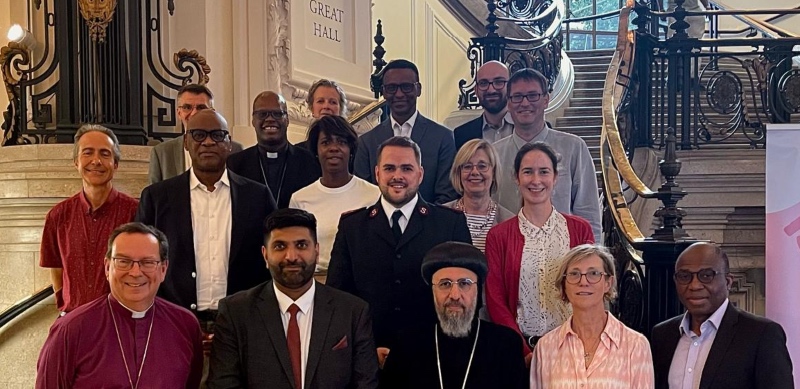
In March 2025, a group of Christian faith leaders, including myself in my role as the Baptist Union’s Public Issues Enabler, were invited to meet with the Minister from the Department of Work and Pensions again, alongside cabinet officials, and a member of the Government’s Child Poverty Taskforce. Once again, we implored the ministers to remove the two-child limit and spoke clearly to the evidence that this action would be the most cost-effective way to start to reduce child poverty.
That same month, as the Government prepared its long-awaited Child Poverty Strategy, JPIT coordinated a high-profile letter urging Government ministers to adopt “bold and ambitious” measures capable of significantly reducing child poverty. The letter highlighted the need for structural reform in social security and was signed by senior church leaders – including the Revd Lynn Green – signalling the ongoing commitment from senior Baptist leaders to call for an end to the two-child limit and the benefit cap as key barriers to children’s wellbeing.
In August 2025, JPIT published a further statement, which was picked up by wider media groups – again signed by Lynn Green and a wide group of denominational leaders – declaring that “it is hard to conceive of an effective Child Poverty Strategy that does not act on the restrictive benefit cap and end the two-child limit.”
And then came the November budget, which finally announced the two-child limit on Universal Credit will be removed, a change projected to lift hundreds of thousands of children out of poverty.
Many faith groups have welcomed the decision. We have certainly not been alone in vocalising the deep harm that this policy has caused, but the national media have certainly noted the role Christian faith groups have played in in shaping public opinion and influencing political action. Indeed, since the announcement, JPIT has received a message from the Prime Minister which read,
Thank you to all those who have campaigned tirelessly to scrap the Two Child Limit. Your voices have been crucial in shining a light on the harm caused by this policy… Every child deserves the best start in life, and thanks to your efforts, we are making that a reality.
And the Department of Work and Pensions also wrote a long letter commending us for our moral voice and for the ongoing part local churches continue to play in alleviating the worst consequences of poverty…
We would like to thank you all for your work and campaigning on tackling poverty. Faith groups play a vital role in mitigating the impact of poverty on children and families, and the government is committed to continuing to work in partnership with charities and organisations.
My hope is that this ‘win’ might demonstrate the enduring power of faithful, long-term compassionate local action and national public advocacy.
A word of thanks – and a charge forward
To everyone who prayed, wrote letters, shared stories, ran foodbanks, held community meetings, signed petitions, met MPs, offered sanctuary and support – thank you. I hope you know the difference you are making and the gospel witness you are proclaiming.
But the job is not finished. As anticipations within social-policy analysis make clear, many families remain vulnerable. The benefit cap, the cost-of-living crisis, housing pressures – all continue to threaten the dignity and wellbeing of children.
As Baptists, I hope we stand ready. May this milestone encourage us to renewed vigilance, steadfast faith, and enduring compassion. May we continue to speak truth to power, amplify the voices of the vulnerable, and embody the gospel of Jesus Christ in word and in deed.
The Revd Steve Tinning is the Baptist Union's Public Issues Enabler, dividing his working week between the Joint Public Issues Team and the Baptist Union of Great Britain
Do you have a view? Share your thoughts via our contact form
Baptist Times, 02/12/2025