Can science explain everything? by John Lennox
A book well worth buying, reading and then lending to friends who think that God and science don’t mix
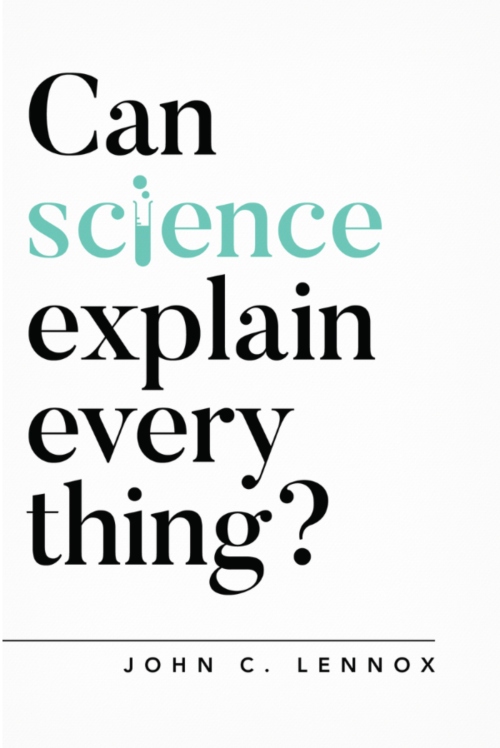 Can science explain everything?
By John C. Lennox
The Good Book Company
ISBN: 9781784984113
Reviewed by: Ernest C. Lucas
John Lennox is Emeritus Professor of Mathematics at Oxford University. He is a well-known speaker and writer on Christian apologetics, especially in the area of science and faith. This book is intended to be an introduction to the “Science and God Debate”. It is especially written for those who think that “God and science don’t mix”.
In response to the claim that it is not possible to be a scientist and believe in God he points out that many of the outstanding pioneers of modern science were convinced believers in God, and that more than 60 percent of the Nobel Prize winners from 1901-2000 identified Christianity as their religious preference.
So why do so many people think the God and science don’t mix? One reason is that the media give prominence to scientists who are atheists and make that claim. Unfortunately people often fail to recognise that the fact that something is said by a scientist doesn’t mean that it is a scientific statement. Carl Sagan’s oft-quoted statement that “The cosmos is all that is, or ever was, or ever will be” is not a statement based on science but on his own atheistic belief. The same is true of Richard Dawkins' assertion that God is a delusion that harms people’s lives. Indeed, Lennox quotes evidence from psychiatric studies which show that religious involvement correlates strongly with human wellbeing. Dawkins' has not done his homework before making a statement in an area beyond his own scientific expertise.
Lennox deals clearly and cogently with a number of the “myths” that are perpetuated in the debate about science and God. Science is not the only way to truth. It does not compete with God as the explanation of something, it gives a different kind of explanation. He “busts” the myths that religion depends on faith but science doesn’t and that science depends on reason but Christianity doesn’t.
He makes clear that it is important to understand the nature and purpose of the Bible. It is not given to teach us science. In the words used by Galileo, it teaches us “how to go to heaven and not how the heavens go”. The laws of nature describe what happens in the universe, they do not cause it. They do not rule out the possibility of miracles. This leads Lennox to discuss the evidence for the resurrection of Jesus, because, he says “Disprove the resurrection, and the whole of Christianity would disappear in a puff of smoke.” He shows how strong the evidence is.
The book ends with a couple of chapters which set out the essence of the Christian good news and challenge uncommitted readers to test whether it is true by committing themselves to Christ. This is a book well worth buying, reading and then lending to friends who think that “God and science don’t mix.”
The Revd Dr Ernest C. Lucas is Vice-Principle Emeritus of Bristol Baptist College and a former research biochemist
Baptist Times, 08/02/2019