A safety-net as we look to unlock society
Those who are in most need are probably going to be the last to benefit from the unlocking, unless specific action is taken to prioritise them, writes Jonathan Clark, director of Premier Lifeline.
Now is the time to build upon contact and links with people in the community who are feeling isolated
When I think back to life just a year ago and reflect on what has happened since, I would never have been able to predict the possible impact of a virus on individuals, communities, the economy and the world.
This is not the first pandemic the world has experienced, just one of many across the centuries, but it is the first of its kind impacting the whole globe in the modern high-tech era. We had been lulled into a false sense of security that medical science had progressed far enough to anticipate, prevent and treat any possible threat before it could disrupt life as we knew it. This was not to be.
For the first time ever in a pandemic, the churches and other places of worship were told to close their doors, communal singing was stopped, and many community support activities were either closed, re-directed online or had to adapt to the conditions of lockdown and social distancing.
In all previous eras affected by a pandemic, the churches remained open, the clergy continued to visit the sick, and activity increased rather than being put on hold, both in terms of gathering for prayer or offering emotional, psychological, spiritual or practical care.
A key change this time round has been the recognition and enforcement of the collective responsibility to stay at home, to minimise any possible human contact beyond the household and to prevent the spread of the virus, thereby saving lives and helping the NHS.
This has gone completely against the hands-on pastoral grain for many caring people. Their immediate and normal reaction would be to reach out to people by visiting and offering social support, along with providing community groups and activities.
Instead focus has gone into practical support with food, finance, medicines, etc. Dealing with the immediate needs at the different stages of the pandemic has had to be at arms’ length.
Much activity went online soon after the Covid-19 emergency took hold, and for those with access to and ability to use modern technology, this has been a real blessing and encouragement. However, for those without the means of connection, or who for whatever reason have difficulty with the formats, this change meant that they were left feeling at best on the side-line and at worst completely marooned, as if on a desert island.
I believe it is naïve to assume, as some do, that everyone is already catered for in some way or other by the “support services” at the current time, whether this relates to the voluntary, statutory, or faith communities. Some have support, but others are crying out for human contact. Premier Lifeline, the confidential telephone helpline I manage, is constantly receiving calls from people who are isolated, lonely and bereft of the usual support they would receive from community groups. In fact, we had our busiest January in 25 years of operation. Circumstances have been such that much has been turned upside down, resulting in an upheaval in the support networks people usually rely on. This remains the case, and it will take some considerable time for things to return to any sense of stability.
Furthermore, there has been a significant increase in the needs of individuals: those with pre-existing needs, supplemented by those suffering from the consequences of the fallout of the virus. The need is now, and also for the foreseeable future, as society readjusts to the post-lockdown world. Just because the freedoms will increase, it will not mean that the needs will reduce. In fact, those who are in most need are probably going to be the last to benefit from the unlocking, unless specific action is taken to prioritise them.
This is a time when the community needs to be proactive, to ensure that people who are socially isolated, for whatever reason, are given a chance to receive help and support.
It may still be some way off for the full return of the drop-ins, coffee mornings, social groups and other support networks, along with faith gatherings and events. However, we have the opportunity now to establish a foundation to build on for the future.
Now is the time to build upon contact and links with people in the community who are feeling isolated. If we wait until the full opening of society, this will be sentencing people to isolation for longer than some will find bearable.
There is a need to consider who is currently without social and emotional support. This may be a wider range of people than we might initially contemplate. Then we need to decide how to contact them, to let them know they are not alone, that there is someone who cares for them. I know this is happening in some areas but it is not universal. Where it is happening, there is always a need to review whether anyone is still falling through the net. Where things have yet to start, the key is to start as soon as possible to ease the lives of people though this time of disruption and transition.
Most of the people needing help are already known to organisations including community groups and churches. It just needs a coordinated approach to ensure that there is contact made and a checking-in with people to see how they are, and to demonstrate that they are remembered.
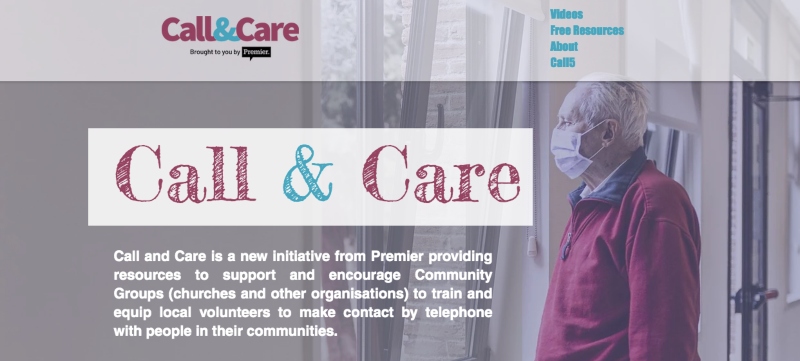
To this end, an initiative has been launched to resource organisations – churches and community groups – to enable and encourage meaningful contact. Call and Care offers a series of freely accessible online videos and downloadable resources, a course outlining simple steps to setting up a local contact group to call people. It can be found at www.callandcare.org.uk.
The training includes material on recruiting volunteers, good listening, mental health and well-being, along with looking after yourself, and a faith component (if applicable). It is not too late to go down this path. In fact, it is more needed and more essential now as we look to the future and the launch of whatever the “new normal” may be. It just needs ignition and the commitment to move ahead.
Baptist Times, 29/03/2021