Black, Gay, British, Christian, Queer by Jarel Robinson-Brown
The book's value lies in helping the reader, whatever their views, to look at the issues through the broad lens of God’s grace rather than relying on interpreting the usual proof texts, and to recognise the pain of a hurting community described without bitterness
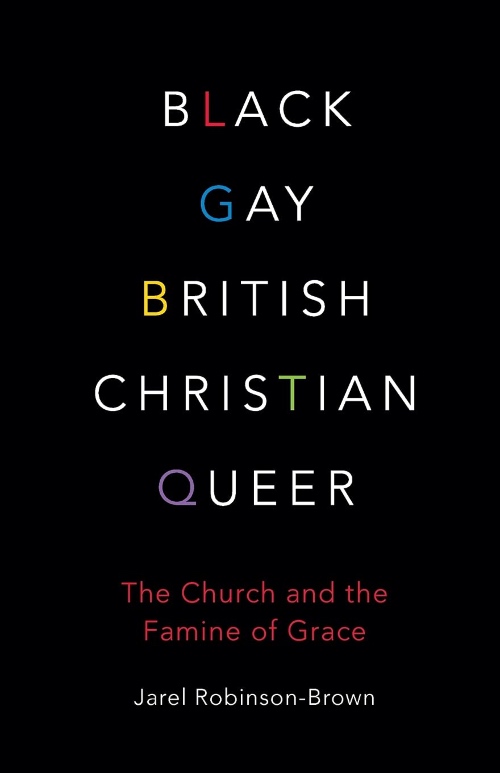 Black, Gay, British, Christian, Queer – the church and the famine of grace
By Jarel Robinson-Brown
SCM Press
ISBN:978-0-334-06048-2
Reviewed by Sue Clements-Jewery
Jarel Robinson-Brown is a gay, British born Jamaican, raised by his grandmother in the Methodist church where he was ordained, and is now an Anglican curate in the diocese of London. His book was written during the early months of the pandemic in the context of the murders in the USA of George Floyd and Breonna Taylor as the ‘Black Lives Matter’ movement was gaining momentum.
This is a book focussing on justice issues both of race and diversity written from a black perspective. In his preface he writes: ‘There are of course black British Christians who are not from my tradition, many will be from charismatic, pentecostal, oriental Orthodox or independent churches. I write primarily as one shaped and committed to a High Wesleyan Sacramentalist/Afro-Catholic tradition in the Anglican church’.
So what is the focus of this book and who is it for?
The author wrestles with the question how LGBTQ+ people can live and enjoy their lives in Christian communities that historically have not welcomed or fully included them especially if they are Black. He seeks to discover what God’s grace is for this significant, diverse group of people, and to challenge Christians who have not yet embraced an anti-racist and pro-diversity stance to do so.
The book’s subtitle (which might have made a more attractive title) is ‘The Church and the Famine of Grace’. Of the five chapters the middle three explore the theology of grace. These chapters are densely written and well annotated. His message is clear – ‘the Church’ by which he means all branches of the Christian church - fails to love those who are not ‘straightforwardly heterosexual’, compounded if they are black, and who report that they only feel accepted if they behave like white heterosexual people. The default category of believer is white and straight, everyone else is excluded from the fullness of God’s grace. In other words there is a famine or severe shortage of grace.
He asks the crucial question: ‘Can the lives of those who grow up to realise that they are attracted to people of the same sex, or that the gender assigned to them at birth isn’t the gender they identify with, really be contrary to a God who loves and accepts unconditionally?’ and asserts:
‘Grace enables me to see myself through the loving gaze of God. God in Christ Jesus calls us to live an authentic life in which we know ourselves to be loved and lovely, valued by God just as we are.’
This book enabled me to recognise that issues of whiteness, along with an (often unconscious) sense of entitlement and assumptions about what is normal are common to all justice issues. Its value lies in helping the reader, whatever their views, to look at the issues through the broad lens of God’s grace rather than relying on interpreting the usual proof texts, and to recognise the pain of a hurting community described without bitterness.
Sue Clements-Jewery, former sexual and relationship psychotherapist