Who put a curse on World Cup winner Emmanuel Petit?
Reflecting on a Christian response to this strange incident in Petit’s life - as well as a postmodern take. By Mark Roques
The World Cup is starting very soon and this article honours this excitement.
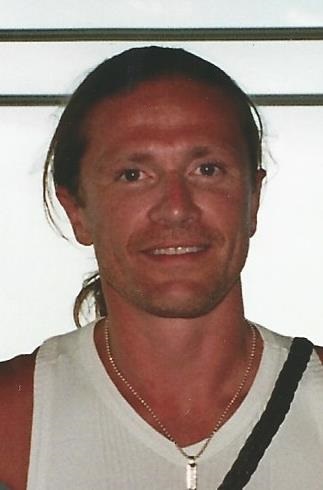 Emmanuel Petit is a French former professional footballer. He is best known for scoring in the 1998 World Cup Final and winning Euro 2000 with France. His goal in the 1998 World Cup final was the last goal of the 20th century in World Cup history.
On the football podcast How To Win The World Cup Petit was interviewed by two comedians, Matt Forde and Alex Brooker. The conversation turned to the superstitious behaviour of many footballers. Former Romanian and Chelsea striker Adrian Mutu famously wore his underpants inside out during matches to ward off bad luck and undo curses. He adopted this unusual ritual after a group of witches warned him that an ex-girlfriend had cast cursing spells on his career. They believed that the reversed underwear would protect him. Mutu trusted in this bizarre ritual to save him.
Petit admitted that he was extremely superstitious. He confessed that he puts salt behind every door in his flat to bring ‘good luck’ and ‘take away bad spirits’. He would be alarmed if you were to open an umbrella in his Parisian flat because it would be very unlucky. Stepping on a manhole would be firmly rebuffed by the charming and good-humoured French footballer.
Petit told a fascinating story about rituals and superstitious behaviour. After the 2002 World Cup, he was relaxing on a beach in Saint-Tropez when a Senegalese man approached him. The man was selling watches and knew Petit personally. According to Petit, the man warned him that people in Senegal had cursed him because they were envious of his success. Petit was enjoying a luxurious lifestyle. He was rich, famous and very popular.
Petit stated that the man informed him that something awful would happen if he ignored the warning. To remove the curse, Petit was told that he had to go to Africa, buy a cow, kill it as part of a ritual sacrifice and then follow instructions from holy men sometimes referred to as ‘marabouts’. Petit ignored the ominous warning.
Six months later, he suffered a serious knee injury while playing for Chelsea F.C. The injury ended his career. Petit admitted that the ‘coincidence’ disturbed him, but he also said he had no regrets and was delighted with his very successful career.
How can we make sense of this intriguing story?
In parts of Senegal and other West African countries, some people consult and pay ‘marabouts’ for spiritual protection against curses, bad luck, diseases and other challenging circumstances. Marabouts are usually religious experts connected to local Islamic and Sufi traditions.
Some marabouts also offer spiritual solutions: prayers, protective amulets, lucky charms, Quranic verses, and rituals intended to remove misfortune and bring protection or blessing. In certain cases, people may sacrifice sheep, goats, cows or even camels as part of these religious rituals. Many believe that these sacrifices ward off harm in the form of curses. These practices often combine Islamic beliefs with older local traditions and customs.
What is a Christian response to this strange incident in Emmanuel Petit’s life?
The New Testament does not state that animal sacrifices were “wrong” in the sense of being a sin or a mistake during the Old Testament period. Instead, it teaches that they were insufficient to permanently take away sins and were made completely obsolete by the ultimate sacrifice of Jesus Christ. The primary text explaining this transition is found in the letter to the Hebrews.
Hebrews 10:4 states that “it is impossible for the blood of bulls and goats to take away sins.” Further we are told that God did not ultimately desire or take pleasure in animal sacrifices (Hebrews 10:5-8). Instead, Jesus came to fulfil God’s will, which established a new covenant through the sacrifice of Jesus’ own body “once for all time” (Hebrews 10:10). It is clear from these passages that to sacrifice a cow today denies what Jesus Christ has achieved in His death and resurrection.
During the podcast the two comedians responded in a typically postmodernist way to Petit’s story. They found it utterly hilarious and Matt Forde cheekily outlined how difficult and messy it would be to kill a cow in a sacred ritual. He joked that he would rather sacrifice a squirrel! Much easier. Both men guffawed at this comical suggestion.
Neil Postman’s 1985 book Amusing Ourselves to Death encapsulates this postmodernist faith. Postmodernism is all about construction and invention with large dollops of irony, cynicism and irreverence to spice up our rather pointless lives. Postmodernists believe passionately that there is no absolute truth. There are only individual preferences that are subjective. In other words individual choice is sacred. American artist Tom Friedman hired a witch in 1992 to curse a space above a white block. His comments were postmodernist: ‘If you believed it, it exists. If you didn’t, it didn’t exist.’
We would do well to notice the slow drip feed of postmodernist indoctrination in the UK today. On a daily basis we are bombarded with postmodernist proposals and advice. Be true to yourself. Follow your heart. Trust in your instincts. You be you. It’s relentless and spiritually bankrupt.
During the podcast Emmanuel Petit did not share the same mocking irreverence as the two comedians. Without doubt he was entertained by their cheeky, saucy banter but he was more open to the hidden reality of cursing and the need for a spiritual solution. However it is clear that all three men had no real understanding of both pagan and Christian perspectives. We could say that they were in thrall to postmodernist faith. In chains to the endless subjectivism and relativism that pervade our western, secular societies.
How would the apostle Paul respond to this story of cursing and supernatural danger? The book of Ephesians is full of biblical insight and wisdom.
Finally, be strong in the Lord and in his mighty power. Put on the full armour of God, so that you can take your stand against the devil’s schemes. For our struggle is not against flesh and blood, but against the rulers, against the authorities, against the powers of this dark world and against the spiritual forces of evil in the heavenly realms. Ephesians 6:10-12
We should not respond to postmodernist folklore and moral paralysis with silence and passivity. This is not a laughing matter. Christians who love God’s Word recognise the reality of cursing and spiteful, sinful behaviour. The death and resurrection of Jesus, the Saviour of the world, has defeated death, decay, the devil and every power that enslaves human beings.
Through Jesus we can pray for God to protect us from evil. There is no need for the sacrifice of cows, squirrels and inane, deadly postmodernist frivolity.
Image | Christophe95 | Wikimedia Commons | Creative Commons Attribution-Share Alike 3.0 Unported
Mark Roques is the Director of RealityBites, where this article originally appeared.
Mark preaches at Cornerstone Baptist Church in Leeds.
Do you have a view? Share your thoughts via our contact form
10/06/2026