Words for the valley
A reflection on lament, the words we reach for when someone is hurting, and the importance of being willing to sit alongside people in their pain rather than feeling that we always need to find an answer or make things better.
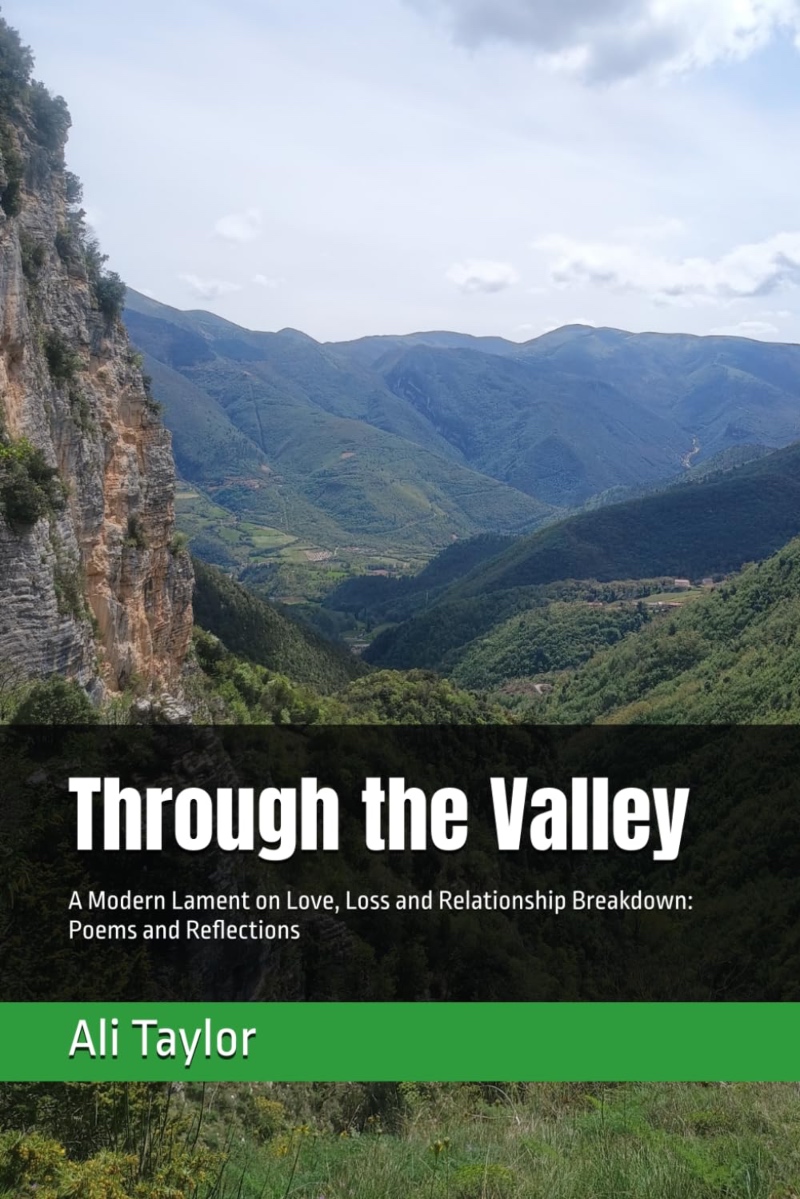
Baptist minister Ali Taylor introduces her new book Through the Valley - A Modern Lament on Love, Loss and Relationship Breakdown: Poems and Reflections
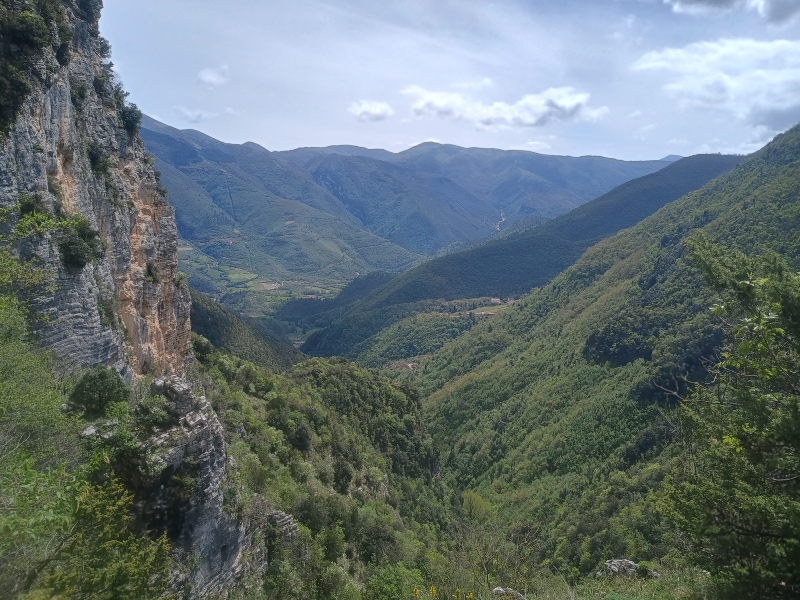
There are some moments when words seem particularly inadequate. What do you say to someone whose marriage has ended? What do you say to the person who has lost someone they love? What do you say when someone tells you that their life has changed in ways they never expected?
Perhaps we have all found ourselves in that place. Sitting with a friend, a family member, a church member or a colleague, desperately wanting to help but knowing that there is very little we can actually do to make things better.
And so we reach for words. Sometimes they are the right words. Sometimes they aren't. We might say, “God has a plan”, or “Everything happens for a reason”, or perhaps simply offer reassurance: “It will be OK.”
Usually, we say these things because we care. We want to offer hope. We want to remind someone that God is there. We want to take away even a little of the pain they are experiencing.
But what if they aren't at a place where these kinds of phrases feel helpful? What if, for a while, they simply need someone who is prepared to sit with them in it, to journey with them rather than offer solutions? Because sometimes the honest answer to “How are you?” is simply: I'm not OK. And perhaps one of the hardest things is realising that we don't always need to say something that will make things better.
We don't have to look very far through the Psalms to discover that God's people have always struggled to find words for difficult things. There are cries of anguish. There is anger. There are questions. There is fear and loneliness. There are moments when God seems absent. And there are some wonderfully honest questions asked of God: How long? Why? Where are you?
These aren't prayers from people who have given up on God. They are cries from the heart, from people bringing the whole of their experience into the presence of God.
Lament is a profound gift because it doesn't ask us to pretend. It doesn't require us to have worked out what God is doing, nor does it demand that we find the positive side of what has happened. And it certainly doesn't mean that hope has disappeared. Instead, lament gives us permission to say: this hurts. I'm not OK.
Perhaps that is something we need to rediscover, not just for ourselves but for the people we walk alongside. Because there will be times when someone comes to us and they are not OK. And perhaps our first response doesn't need to be an answer. Perhaps it can simply be presence. To listen. To sit. To cry. To pray when they cannot pray for themselves. To resist the temptation to fill every silence with words. To let someone know that they don't have to make their pain more comfortable for us.
I know something of this from my own experience.
A number of years ago, my own life changed in a way I had not anticipated. Suddenly I found myself navigating a depth of pain that I had never expected to experience. And whilst Scripture had its place, I struggled to find words that adequately expressed what I was feeling in terms of my grief, anger, confusion and loneliness.
 So I began to write. At that point I had no plans to write a book, and I certainly wasn't thinking about publishing anything. I simply needed somewhere for the pain and distress to be expressed.
And what came were words – many words. Those words became poems, and the poems began to tell a story of their own. Not a story with a neat beginning, middle and end, but something much more like the landscape of lament: sometimes angry, sometimes bewildered, sometimes lonely, sometimes hopeful, sometimes simply exhausted.
In time I came to realise that although the circumstances were mine, the emotions were not. Most of us will find ourselves in a valley at some point. It might be relationship breakdown. It might be bereavement, illness, disappointment, family difficulties or the loss of something we thought would always be there. And no doubt a number of us will also find ourselves standing alongside someone else in their valley.
Sometimes we will be the one who is hurting. Sometimes we will be the one trying to work out what to say. Sometimes, perhaps, we will be both.
And that is why I eventually gathered the poems together into Through the Valley: A Modern Lament on Love, Loss and Relationship Breakdown: Poems and Reflections.
The book grew out of my own experience, but it isn't intended only for people who have experienced relationship breakdown themselves. It is for anyone who knows something of heartbreak and loss – and for those who find themselves walking alongside them.
Each poem is accompanied by a few questions for reflection, conversation or prayer. Because sometimes we need questions. And sometimes we just need words that help us to realise we are not alone in what we’re going through.
One of the poems is called Hope You Are OK.
It begins:
No, I'm not ok
What would make you think that?
Life hasn't carried on as normal for me
Like it might have for you.
The poem goes on to describe something of the experience of trying to keep going, to be strong for others, while carrying a brokenness that isn't always visible:
And I will hold them together
In the darkest of dark times
But the strength I portray
Covers my brokenness.
And it ends simply:
No, I'm not ok
I'm not ok
I'm not ok
I'm not ok
I think there is something quite powerful about being able to say those three words without immediately having to qualify them.
I'm not OK.
Not, “I'm not OK, but I'm getting there.”
Not, “I'm not OK, but I know God has a plan.”
Just: I'm not OK.
And perhaps that is where we sometimes need to begin.
We are a people who proclaim hope, and rightly so. We believe that death does not have the final word, that God is present in our suffering, and that resurrection is real. But perhaps proclaiming hope doesn't mean that we have to hurry people towards it. Perhaps sometimes hope looks like staying. Staying when there are no answers. Staying when the tears come. Staying when faith feels fragile. Staying when the person in front of us cannot yet see beyond the valley they have found themselves in.
The Psalms don't give us a faith that avoids pain. They give us a faith that has words for it. Perhaps that is something worth recovering. Not just for those who are hurting, but for all of us who are called to walk alongside them. Because sometimes the most faithful thing we can offer isn't an explanation. It is our presence. And sometimes, when our own words fail, it is enough to borrow the words of Scripture – or the words of another person who has walked this road before us – and discover that we are not the first to find ourselves here.
There are words for the valley.
There is lament.
And there is God.
Even here.
The Revd Ali Taylor is minister of Yardley Baptist Church, Birmingham, and author of Through the Valley: A Modern Lament on Love, Loss and Relationship Breakdown: Poems and Reflections.
05/10/2026