Film review: The Promise
A film portraying the Armenian genocide a century ago is both an important history lesson and raises questions about our world today. By Paul Hobson
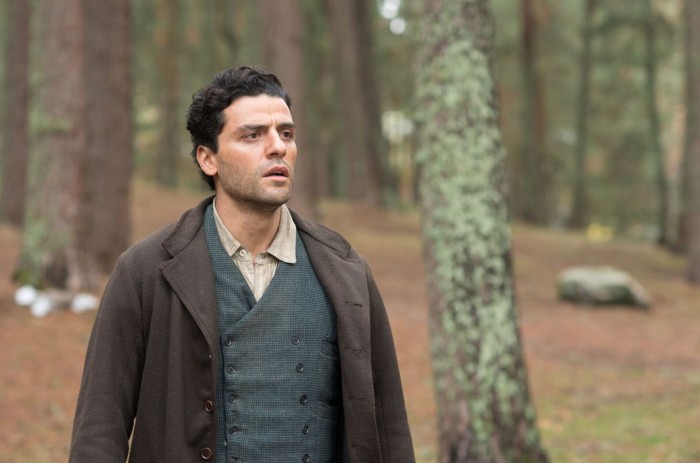
With their period detail and moving sequences, films have the capacity to bring a fresh lens to past events. In recent years Twelve Years a Slave and Selma are among those to have delivered a slice of history to the big screen, not only raising awareness of what’s gone before, but highlighting issues pertinent to the present.
The Promise is a new addition to the genre, with the Armenian Genocide a century ago its focus. As the Ottoman Empire began losing territory in the late 19th century, the ruling elite was seized by a nationalist current that targeted Christian minorities, in particular the Armenians.
Once the Empire entered World War 1 on the side of Germany and Austria-Hungary, a propaganda campaign depicted the Armenians as aligned with the opposing Russian Empire. By Government order, the Armenian population of Anatolia was either killed on sight or sent on death marches towards the Syrian desert.
It is estimated that 1.5 million Armenians died as a result. This was an atrocity that actually gave rise to the term genocide.
The Promise is seen through the eyes of Armenian villager Michael Boghosian (Oscar Isaac), who travels to Constantinople in 1914 to study medicine. It spends time showing Michael’s early days in the city, charting his budding friendship with Ana (Charlotte Le Bon), a fellow Armenian who is already in a relationship with American photo-journalist Chris Myers (Christian Bale). Confusion, torn loyalties and rivalry ensue.
But the love triangle is not isolated from wider events. The Promise catches the awful speed with which the Armenians were murderously persecuted, and as the film’s central character, the mounting of Michael’s own losses. The love story becomes secondary, which is how it should be, in the wake of such tragic overwhelming events. And yet, this is a picture not without hope.
Although set 100 years ago, The Promise asks much about today. How do we welcome the stranger? How do we respond to those who stigmatise a people based on their ethnicity or religious beliefs? How, as Christians, do we feel about taking up arms? The important role of journalists, doing the right thing even at great personal cost and simply not giving up, is also highlighted in this emotional film.
Religious persecution is one of the root causes of many of the world’s current crises. Rediscovering an old one may help shape our response to those happening today.
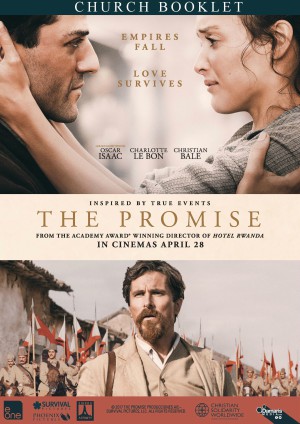 Damaris Media and Christian Solidarity Worldwide has produced a guide to help churches reflect on the themes portrayed in The Promise, which are just as timely and urgent today.
Paul Hobson is a writer/editor in the Faith and Society Team of the Baptist Union of Great Britain. As part of this role he edits The Baptist Times.
Baptist Times, 01/05/2017