‘It shows just how widespread and relied upon this work is’
New research has highlighted the scale of church provision to local communities
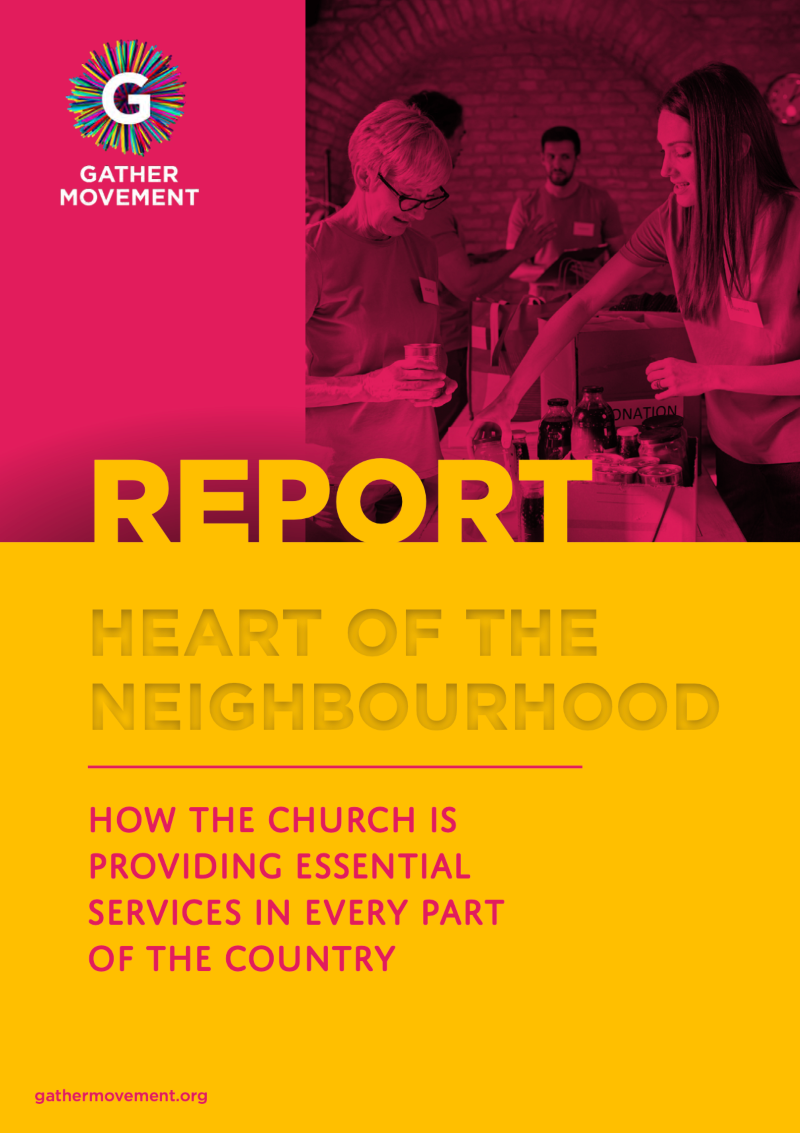 The findings of a report titled Heart of the Neighbourhood: How the Church Is Providing Essential Services in Every Part of the Country, suggests churches regularly deliver an estimated quarter of a million essential health and care services to local communities.
The services documented include food provision, debt advice, mental health and wellbeing support and youth activities, and initiatives addressing loneliness.
The research was conducted by the charity the Gather Movement, which is led by Baptist minister Roger Sutton. It was based on mapping of 1,632 churches completed across 253 local authorities, and was independently verified. The research identified 12,840 instances of community provision across children and family provision, food security, mental health, and housing and homelessness.
If these results are representative of England’s 33,000 churches, this would mean that a quarter of a million essential services are being delivered regularly by churches and Christian charities across England.
The research provides ‘the first comprehensive national picture of the extent to which churches are supporting local communities’, said Roger, who is CEO of the Gather Movement.
‘Churches have long been part of the fabric of local communities. What this research does for the first time is to show, with evidence, just how widespread and relied upon this work is.’
Many of these services are accessed by people regardless of faith, and often provide support where other provision is stretched or unavailable, Roger continued.
‘This isn’t about belief — it’s about what is happening on the ground in communities every day.’
The report includes national recommendations for those using these findings to strengthen communities.
‘The aim is not simply to recognise the contribution of churches but to connect relevant organisations,’ Gather said.
‘By making visible what is already happening and strengthening collaboration across sectors, communities can unlock existing capacity, reduce pressure on public services and ensure that more people receive the support they need, in order to build strong local communities.’
The research was presented to the Faith and Society All-Party Parliamentary Group in Westminster on 8 September.
Gather continued, ‘The research shows church-based provision forms a significant yet largely unrecognised part of the nation’s social support infrastructure.
‘In the context of the cost of living crisis, the research shows that churches are not simply offering goodwill, but delivering material, emotional, and preventative support at scale—functioning as an under-acknowledged pillar of the social support ecosystem.’
Public Issues Enabler Steve Tinning attended the launch. He welcomed the findings, as well as re-iterated the need to continue to ask why the needs exist in the first place, and what might be done to reduce them.
'I came away from the launch enormously encouraged, both by the findings of the report and by the spirit in which the Gather Movement is approaching this work,' Steve said.
'What particularly impressed me was the strong emphasis on partnership – between churches, across faith communities, and with local authorities and other organisations. Gather outlined a wonderfully generous and collaborative approach - with no ego whatsoever - seeking to give proper recognition to the extraordinary contribution that churches are already making in communities across the country and to strengthen the partnerships that make this possible.
'That contribution deserves recognition and appreciation, not least from government and local authorities.
'Yet at the same time, we need to be careful that we don't inadvertently find ourselves celebrating the fact that churches are opening foodbanks and night shelters - I’m sure we would all prefer these provisions were not necessary.
'Alongside meeting immediate and desperate needs, we must continue to ask why those needs exist in the first place and what might be done to reduce them.
'Churches have a contribution to make in the public square too – working with others and speaking constructively about how poverty, homelessness, isolation and inequality might be addressed further upstream. These aren't competing visions of the Church's role in a neighbourhood, but different dimensions of the same commitment to seek its flourishing.'
Andy Burnham's challenge - why the research was commissioned
The research came about following a challenge by Andy Burnham, the current Prime Minister. At the 2022 Gather Movement Summit, Mr Burnham, then Mayor of Greater Manchester, praised the vital contribution that faith communities had made during the COVID-19 pandemic.
He challenged church leaders to be more ambitious in working together to address shared priorities for helping people to start well, live well, and age well. He suggested that collaboration would become much easier if civic leaders could engage with churches through a single, coordinated point of contact rather than approaching individual organisations separately.
This vision was first put into practice in 2024 when Oldham Council Family Hubs brought together leaders from local government, health, the voluntary sector, and churches to explore closer collaboration. A key question emerged: What services are churches already providing, and where are they located?
To answer this, Oldham commissioned the first Gather Movement faith-based action mapping survey in 2024.
The results demonstrated the scale, diversity, and reach of church-led social action, providing a practical foundation for stronger partnerships.
The success of the Oldham pilot quickly generated interest across England. Local authorities, integrated care systems, church networks, and other partners recognised the value of having a shared understanding of the community assets already present within their neighbourhoods.
Gather Movement is a faith-based charity that supports and develops a movement based in over 150 UK cities and towns involving over 8,000 churches and charities who are working together and alongside other partners on the ground to see our places transformed.
12/09/2026